Balancing the demands of the autumn season—ranging from the full resumption of academic calendars to the creeping obligations of approaching year-end holidays—often leaves television enthusiasts with limited time for long-form narrative consumption. For viewers seeking high-quality serialized television that delivers a complete, self-contained story without the multi-season commitment or the anxiety of eventual cancellation, subscription video-on-demand platform Max offers several critically acclaimed miniseries. Ranging from harrowing historical drama to subversive superhero deconstruction and unflinching contemporary social commentary, these three limited series provide compelling viewing experiences that can be comfortably completed over a single weekend.
The Cinematic Reconstruction of a Nuclear Catastrophe: Chernobyl
Leading the slate of high-impact limited series on Max is Chernobyl, a five-part historical drama that originally premiered on HBO in 2019 to widespread critical acclaim and unprecedented audience engagement. The production serves as a meticulous, unflinching examination of the world’s worst anthropogenic nuclear disaster, which occurred on April 26, 1986, at the Chernobyl Nuclear Power Plant near the city of Pripyat in the Ukrainian Soviet Socialist Republic.

Before showrunner Craig Mazin achieved global success with the television adaptation of video game franchise The Last of Us, he established his credentials as a master of tense, prestige drama by writing and executive producing Chernobyl. The series maintains an exceptional 95% approval rating on review aggregator Rotten Tomatoes, buoyed by its stark atmosphere, meticulous historical research, and powerful central performances. Jared Harris stars as Valery Legasov, a prominent Soviet inorganic chemist and first deputy director of the Kurchatov Institute of Atomic Energy, who was appointed to the government commission investigating the disaster. Stellan Skarsgård portrays Boris Shcherbina, the Soviet politician who served as the vice-chairman of the Council of Ministers and head of the governmental commission.
The narrative chronology begins immediately in the grim aftermath of the reactor explosion, tracing the frantic containment efforts and the bureaucratic wall of silence erected by Soviet authorities. As Legasov and Shcherbina attempt to quantify the invisible threat of radiation poisoning, they uncover an institutional culture defined by pervasive negligence, systemic cover-ups, and a willingness to sacrifice human lives to protect the political prestige of the state.
Critically, the production succeeds by translating complex nuclear physics—such as the mechanics of xenon poisoning, control rod graphite tips, and neutron moderation—into accessible dramatic stakes for a global audience. The psychological toll on the liquidators, emergency responders, and local residents is rendered with devastating clarity. Beyond its immediate narrative power, Chernobyl serves as an enduring analysis of institutional accountability, the suppression of scientific truth, and the catastrophic costs of systemic corruption.
Deconstructing the Myth of the Masked Hero: Watchmen

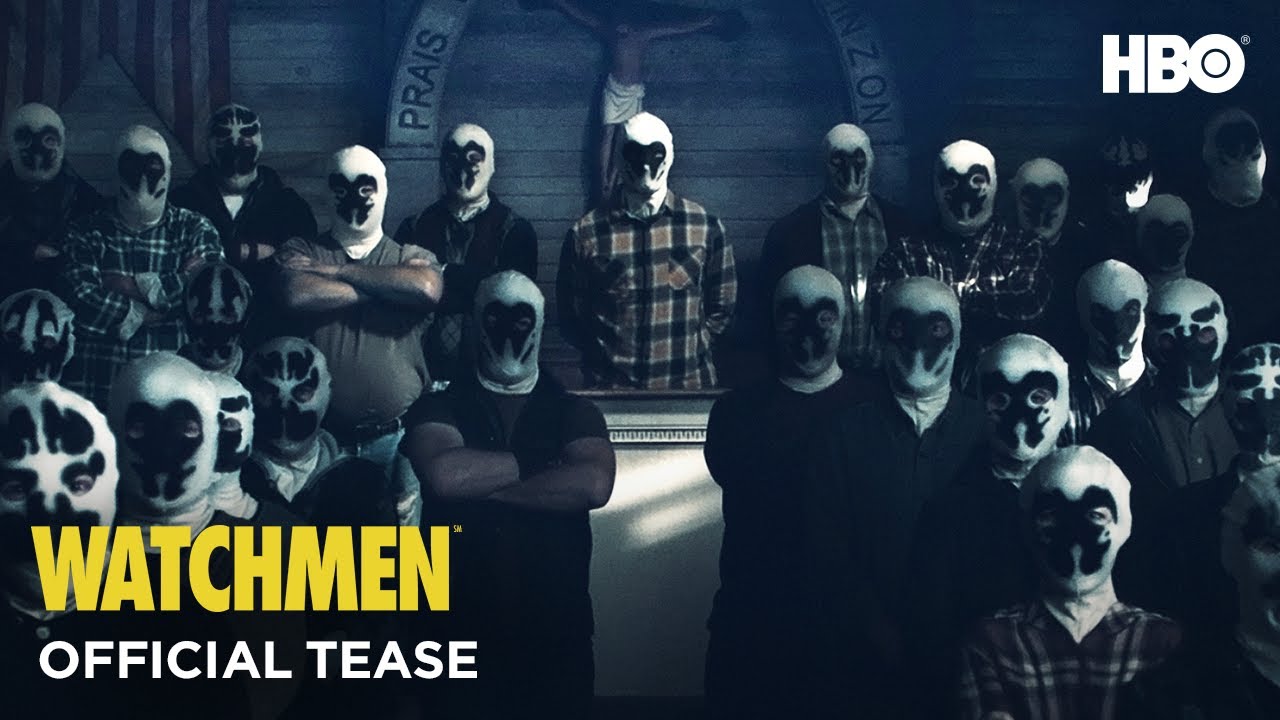
For viewers interested in speculative fiction and genre subversion, Damon Lindelof’s adaptation of Watchmen offers a complex, politically charged narrative set within an alternate history of the United States. Conceived as a continuation rather than a direct remake of Alan Moore and Dave Gibbons’ seminal 1986 DC Comics graphic novel, the nine-episode limited series approaches superheroes not as noble saviors, but as dangerous cultural and political anomalies.
Set in Tulsa, Oklahoma, in the year 2019—34 years after the events depicted in the original source material—the story unfolds in a world where Richard Nixon served multiple terms as president, cell phones do not exist due to a ban on electronic computing, and masked vigilantes have been outlawed following widespread public backlash. The central plot revolves around Angela Abar, played by Regina King, a decorated police detective who operates undercover as the masked vigilante Sister Night. Abar investigates the resurgence of the Seventh Kavalry, a domestic terrorist organization of white supremacists who have co-opted the journal of the late vigilante Rorschach to wage a violent race war against racial minorities and the local police force.
The narrative expands outward to incorporate Jeremy Irons as an aging and disillusioned Adrian Veidt—formerly the world’s smartest man and the mastermind behind a massive global deception intended to prevent nuclear war. Concurrently, the series explores the god-like, blue-skinned physicist Doctor Manhattan, whose prolonged absence from Earth complicates geopolitical stability.
Watchmen received widespread critical acclaim, currently holding a 96% score on Rotten Tomatoes, and swept the Primetime Emmy Awards, winning 11 trophies including Outstanding Limited Series. Lindelof deliberately structured the project as a single, cohesive narrative arc with a definitive conclusion, ensuring that the show operates as a complete artistic statement without requiring subsequent seasons. The series addresses systemic racism, the legacy of the 1921 Tulsa Race Massacre, the trauma of police militarization, and the ethics of state-sanctioned power.

An Unflinching Examination of Modern Trauma: I May Destroy You
Rounding out the trio of recommended weekend viewing is I May Destroy You, a groundbreaking British drama created, written, co-directed, and executive produced by Michaela Coel. Best known for creating and starring in the critically acclaimed comedy series Chewing Gum, Coel drew heavily upon her own personal experiences with sexual assault to craft this intensely personal yet universally resonant 12-episode narrative.
The story follows Arabella Essiedu, played by Coel, a rising literary star living in London who achieved sudden internet fame with her debut novel. While facing severe writer’s block and struggling under the pressure of producing a second book following a lucrative publishing contract, Arabella takes a break from her deadline to meet friends at a local bar. During the night out, her drink is spiked with a date-rape drug. The subsequent morning brings fragmented, hazy memories of being sexually assaulted in the bathroom stall of her own publishing office.
As Arabella attempts to reconstruct the chronology of the evening, the series details her arduous psychological journey toward healing, acceptance, and understanding. Rather than focusing solely on the assault itself, Coel broadens the narrative scope to explore the myriad ways contemporary society defines consent, technological intrusion, modern dating culture, and the systemic failures of law enforcement in handling sexual violence.
The series is supported by standout performances from Weruche Opia as Terry, Arabella’s loyal yet flawed best friend, and Paapa Essiedu as Kwame, a gay primary school teacher navigating his own encounters with assault and vulnerability. I May Destroy You achieved near-universal critical acclaim, securing a 98% rating on Rotten Tomatoes and earning widespread recognition for its formal audacity, sharp dark humor, and emotional honesty. Like Chernobyl and Watchmen, Coel’s creation stands as a complete artistic work, offering a deeply cathartic and thought-provoking conclusion that rewards uninterrupted viewing over a single weekend.
Broader Implications for Weekend Streaming Habits
The availability of these high-caliber, finite narratives on Max highlights a broader shift in consumer preferences within the competitive streaming landscape. As audiences experience fatigue from protracted multi-season television franchises plagued by creative drift or indefinite hiatuses, the demand for high-production-value limited series has steadily increased. These self-contained narratives offer the narrative depth and character development traditionally associated with feature films, combined with the immersive pacing of serialized television.
Industry analysts note that platforms investing in premium miniseries often see higher completion rates compared to longer-running series, as viewers appreciate the low barrier to entry and the guarantee of a definitive conclusion. Whether through historical autopsy, superhero deconstruction, or contemporary psychological drama, platforms like Max continue to demonstrate that finite storytelling remains one of the most effective ways to capture and retain subscriber attention in an increasingly crowded media ecosystem.